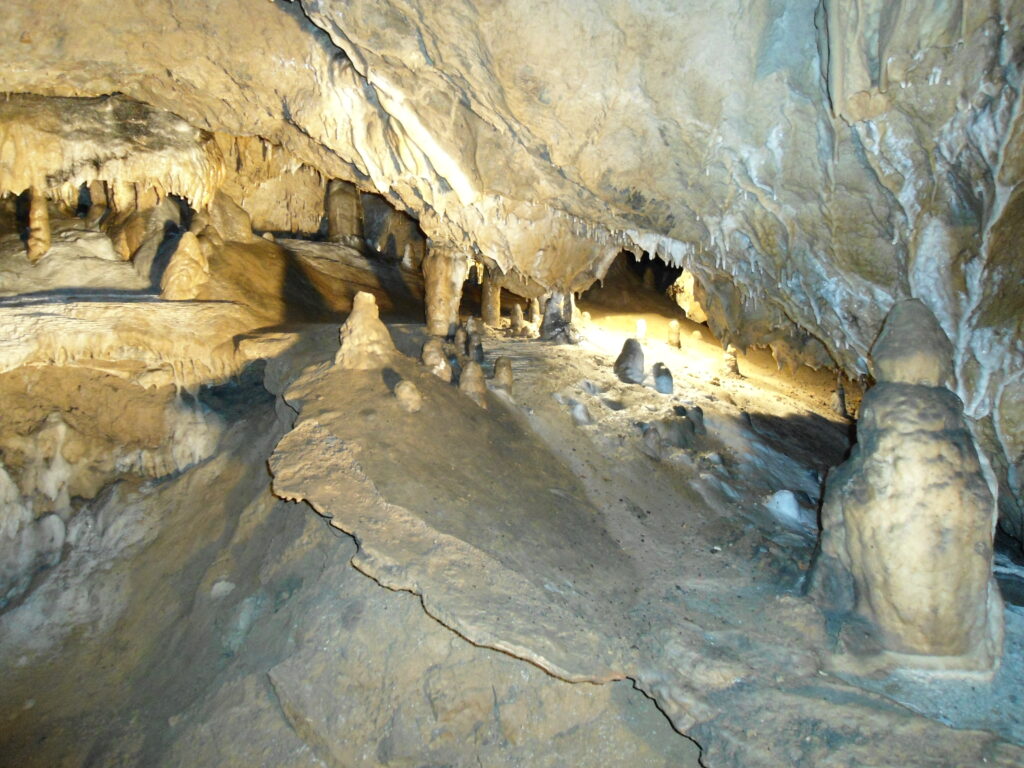
The Abîme Cave, also known as the Comblain Cave, is located at the geological border between the Condroz and the Famenne regions, on the western slope of the Ourthe River. Formed millions of years ago by the runoff of torrential waters and later shaped by rainwater seeping through the limestone, the cave was only discovered in 1900 when a villager’s dog fell into an abyss, alerting the authorities.
Galerie photos
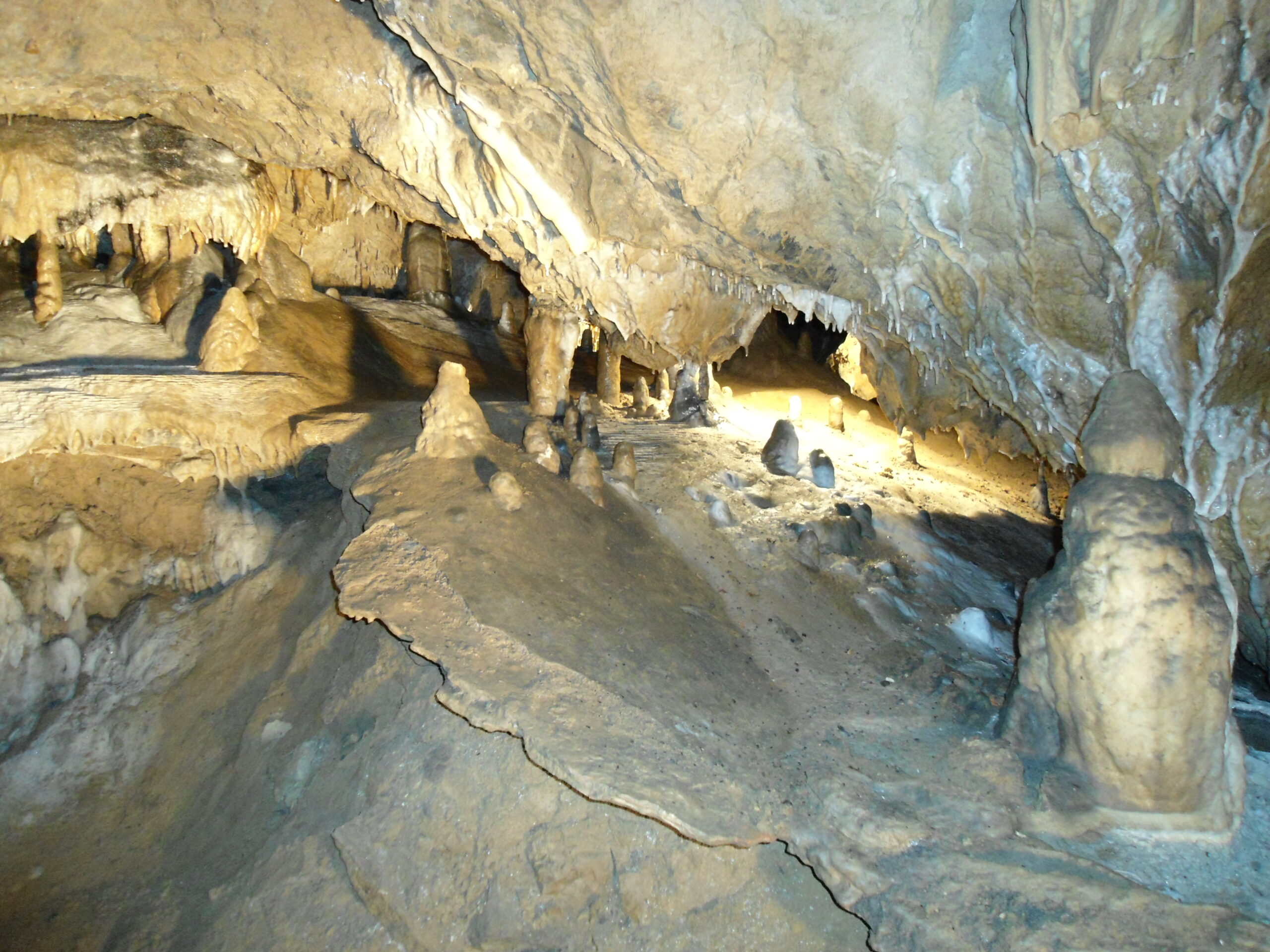
Rebexho, CC BY-SA 3.0, via Wikimedia Commons
Description
The Abîme Cave is a natural cavity that descends deep into the ground, featuring a 22-meter chasm that gave the cave its name. It has been fitted out for visitors and has been open to the public for about fifteen years. Visitors can explore numerous chambers connected by galleries, illuminated to highlight the varied colors and shapes of stalactites, stalagmites, soda straws, rimstone dams, and other limestone formations. Highlights of the visit include the chasm itself, the waterfall chamber, the dinosaur head, Saint Nicholas, the Virgin Mary, and many other striking formations.
The temperature inside the cave remains constant at around 10 °C. The cave is also home to several species of bats that hibernate there, and ecological management measures are in place to protect them, including restricting public access to certain areas during the hibernation period.
Guided tours are offered four times a day during school holidays (Easter, summer, All Saints’), as well as on weekends and public holidays in May and June. Visitors begin with an educational introduction explaining the cave’s formation using original models, before embarking on a one-hour-and-fifteen-minute underground walk led by a bilingual guide (French–Dutch). In summer and during the All Saints’ holidays, themed tours are also organized to provide visitors with a more specialized experience.