St. George’s Church
La Bruyère, Namur
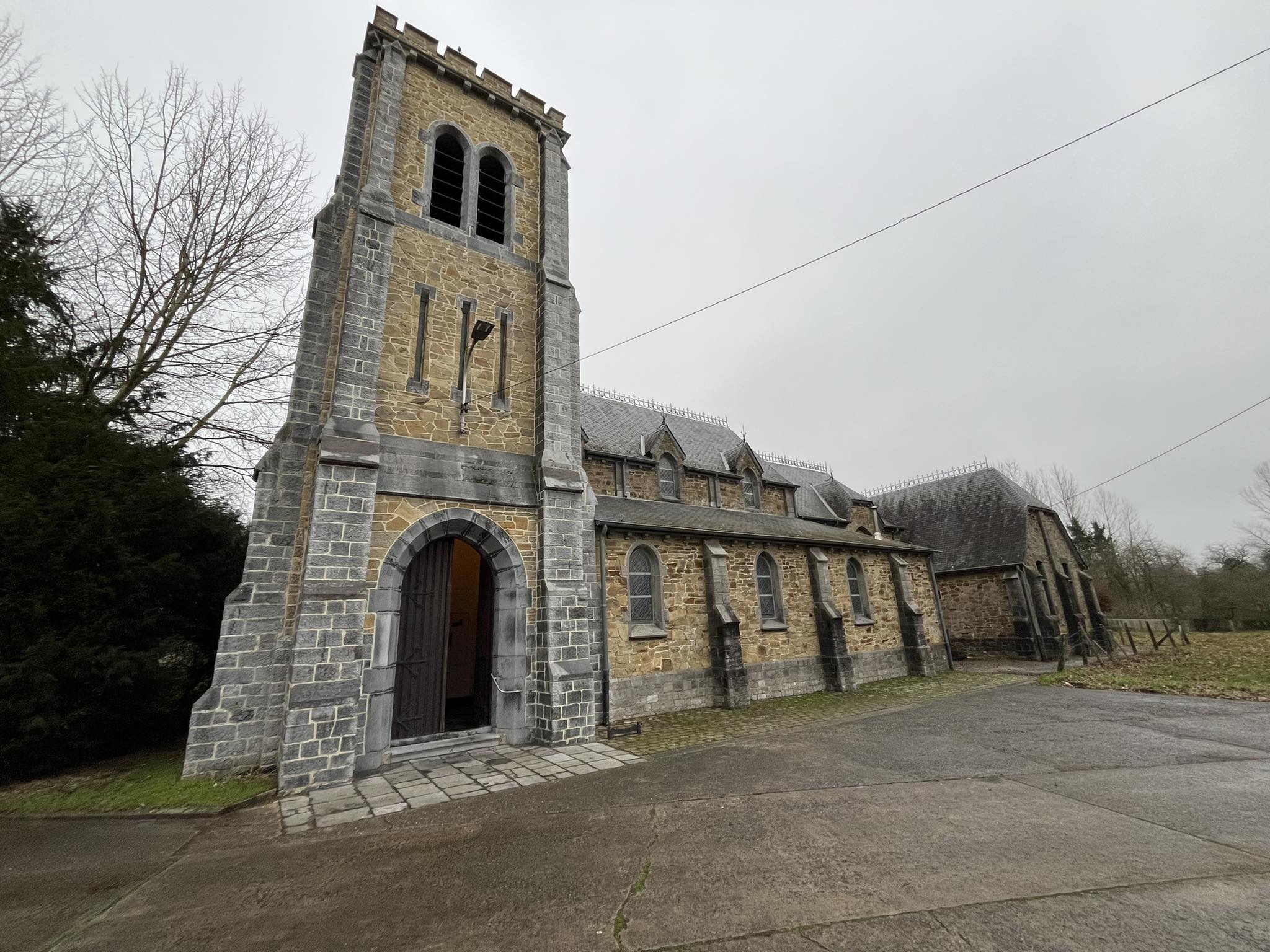
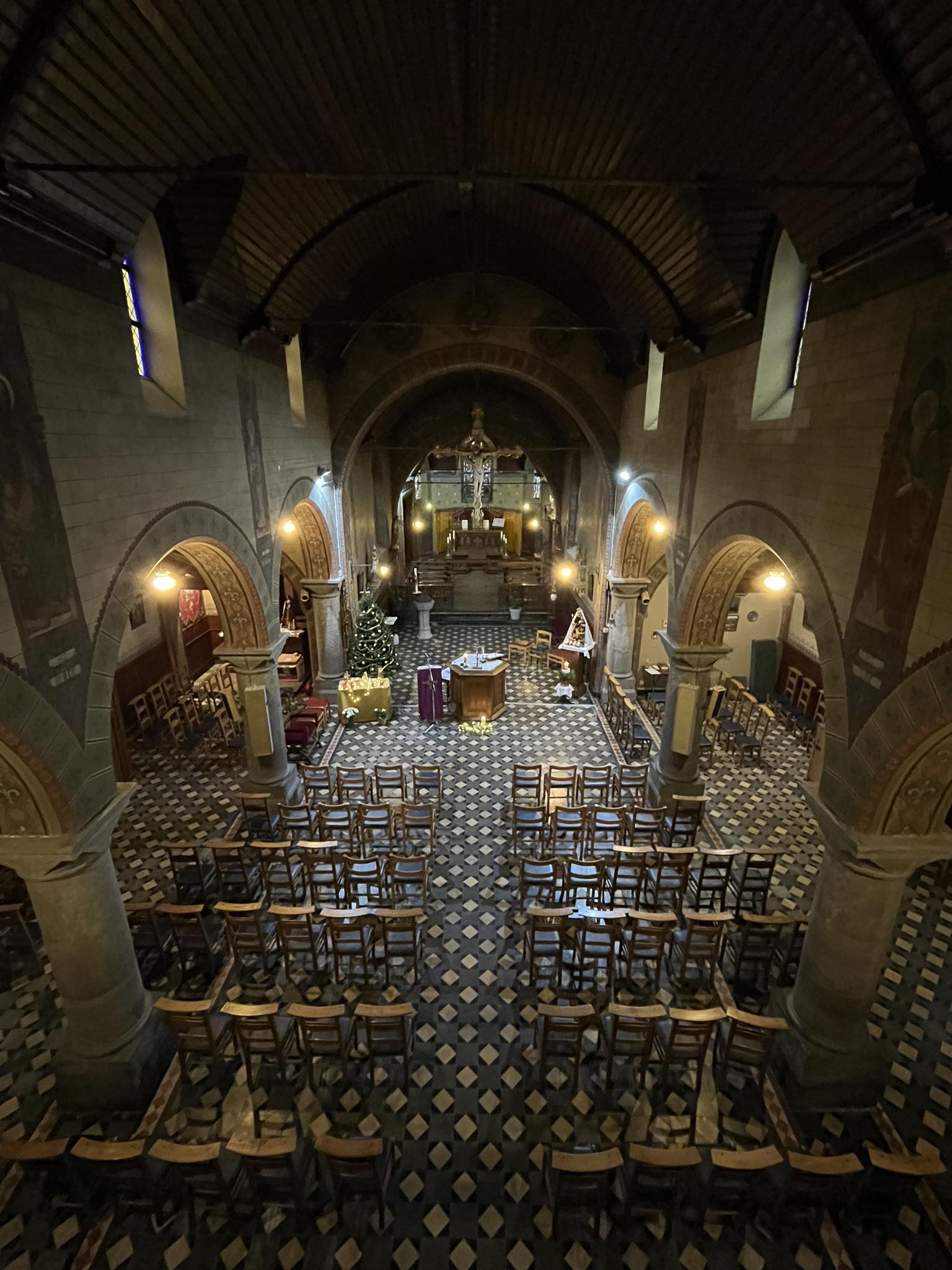
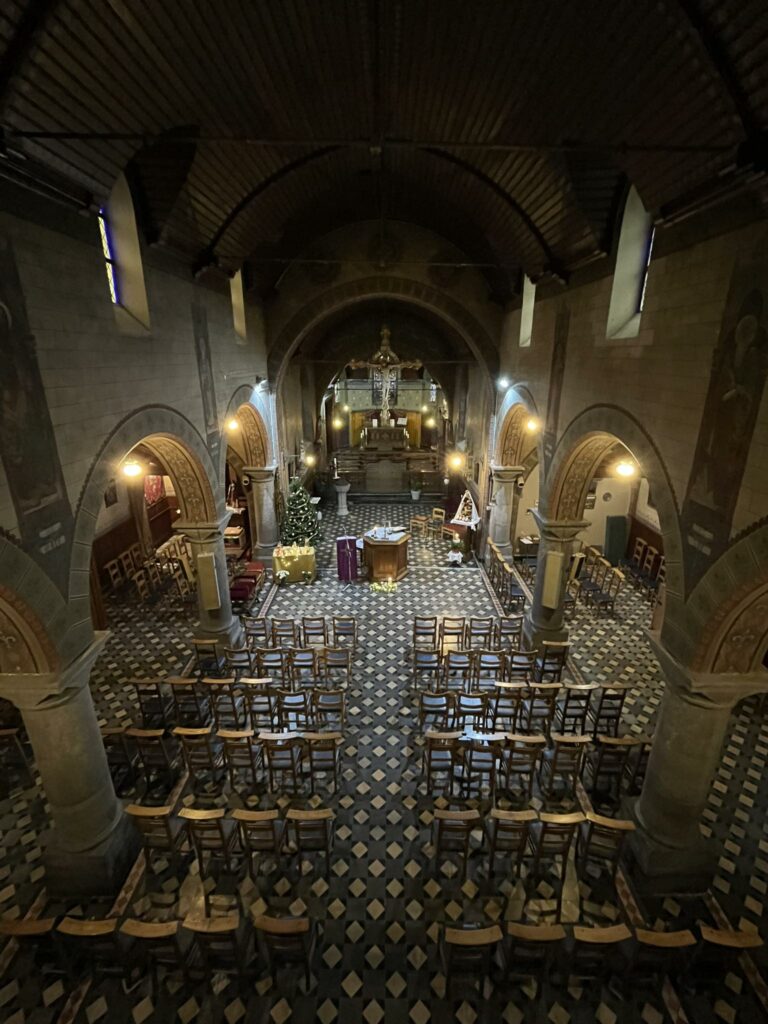
The charming Saint-Georges Church in Villers-lez-Heest—located near the Pitteurs de Budingen Castle—stands out as a gem of Anglo-Saxon Gothic architecture. Remarkable in many ways, it appears to be one of the few examples of this style in Belgium.
History
The current building of Saint-Georges Church, designed by architect Edmond Jamar in 1891, has roots dating back to the 16th century, when it was a modest chapel affiliated with the parish of Émines. Remnants from that era, such as a tombstone and a statue of the patron saint, have been preserved.
The history of the church is closely linked to that of the nearby Pitteurs de Budingen Castle. In 1738, the site was expanded due to its cramped conditions. Over the years, the hamlet of Villers-lez-Heest grew into a more populous village. In 1889, an independent parish was established for Villers-lez-Heest, marking a new phase of construction for the church in the Anglo-Saxon ogival style, completed in 1891 and furnished by the municipality in 1892.
The Legend of Saint George
George of Lydda, born in Cappadocia to a Christian family, became an officer in the Roman army and rose to the highest ranks under Emperor Diocletian. During a journey through the city of Silenus in Libya, he encountered a fearsome dragon that was terrorizing the city by demanding a daily tribute of two young men chosen by lot.
George, mounted on his white horse, intervened when the lot fell on the king’s daughter as the monster’s next victim. Engaging in a fierce battle, and with the help of Christ after making the sign of the cross, he pierced the dragon with his spear. Freeing the princess, he led the tamed dragon into the city.
The people of Silene, impressed by this act, agreed to convert to Christianity and be baptized. George, after slaying the dragon with a single blow of his scimitar, freed them from the terror it had instilled. The beast’s corpse was then dragged outside the city walls, pulled by four oxen.
Following the publication of Diocletian’s edicts against Christians, George was imprisoned. Despite the tortures he endured—such as being flayed alive, scalded with boiling water, tortured on the wheel, and quartered—his faith remained unshaken. Miraculously, he survived and was finally beheaded on April 23, 303.
A Movie Star
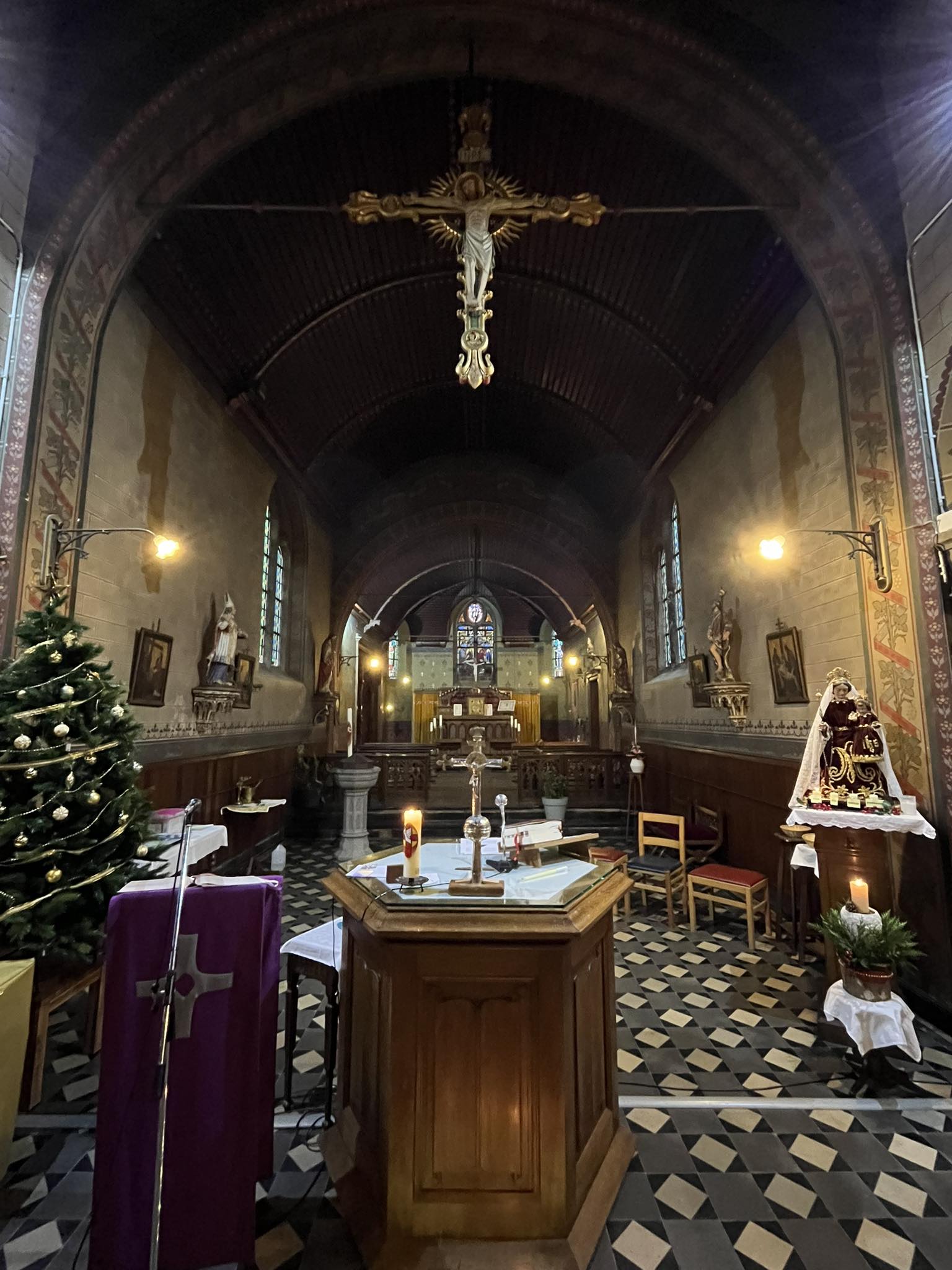
If you’re a fan of movies and TV shows, the interior of this church will look familiar to you.
It has indeed been used as a filming location for several music videos and TV series, as well as a set for the 2016 film “The Confession,” starring Romain Duris, Marine Vacth, and Anne Le Ny.
Galerie photos