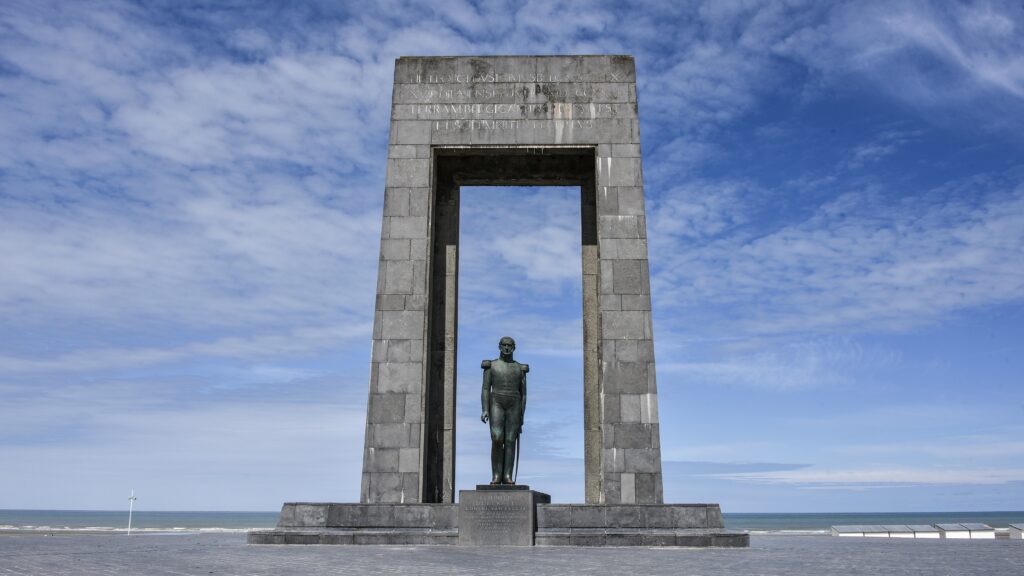
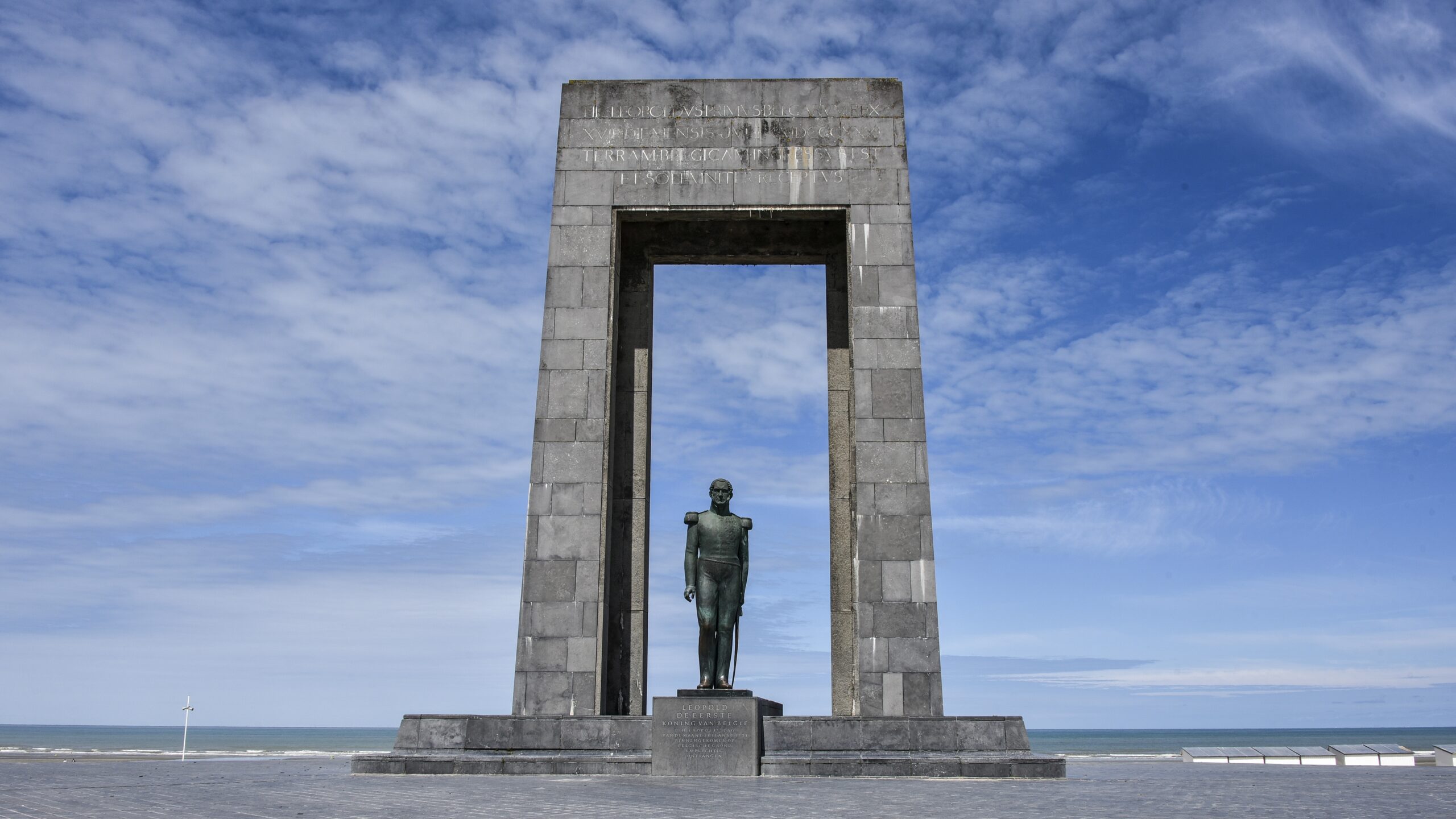
In La Panne, at the end of Zeelaan, where the town meets the dunes and the sea, stands a monument steeped in national history. The Monument to Leopold I marks a symbolic place: the spot where the very first king of the Belgians set foot on Belgian soil on July 17, 1831.
Galerie photos
Paul Hermans, CC0, via Wikimedia Commons
A founding place in Belgian history
It was at this precise location, on the Dune du Perroquet, that Leopold of Saxe-Coburg made his official entry into Belgium. Arriving by carriage from Dunkirk, he was warmly welcomed by the local population before embarking on a long journey across the country.
This moment marks the concrete starting point of the Belgian monarchy. Four days later, on July 21, 1831, Leopold I was sworn in in Brussels and became the first king of the Belgians.
A monumental memorial
The current monument was inaugurated in 1958, on the 125th anniversary of the Belgian dynasty, in the presence of King Baudouin. It was designed by sculptor René Cliquet and architect Victor Martiny.
The ensemble consists of a 4-meter-high bronze statue of Leopold I, surrounded by a monumental portico rising to a height of approximately 14 meters. The sober and solemn architecture reinforces the symbolic dimension of the site.
A statue facing Belgium
One striking detail gives the monument its full significance: the statue of the king faces Belgium and deliberately turns its back on the North Sea and his former homeland, the United Kingdom. This choice symbolizes the sovereign’s definitive commitment to his new country.
The portico bears a Latin inscription commemorating Leopold I’s entry into Belgium on July 17, 1831, while the base of the statue repeats the same message in Dutch.
A setting between dunes, beach, and esplanade
Located right next to the beach, the monument enjoys an exceptional location between sand, sea, and urban space. It is an ideal stop during a walk along the Leopold I Esplanade or a stroll through the dunes.
The contrast between the monument’s solemnity and the relaxed atmosphere of the seaside resort makes it a unique place, often overlooked by visitors in a hurry.