A New Construction to Replace Château de Vêves
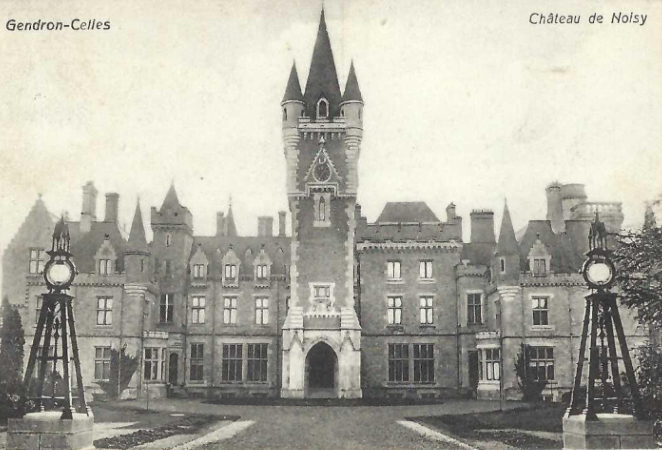
Fleeing the French Revolution, Count de Liedekerke-Beaufort left Château de Vêves and took refuge in Celles, where he owned a small manor known as “Château de Noisy.” Starting in 1866, his descendants decided to transform this modest residence into a magnificent neo-Gothic castle inspired by the great English country houses.
The architect Edward Milner designed the original plans, but died before the project was completed. The work was finished in 1907 by the French architect Pelchner, who added the castle’s most iconic feature: a majestic 67-meter tower topped with a monumental clock.
A Summer Residence Before Becoming a Holiday Camp
For decades, Château de Noisy served as a summer residence for the aristocratic family. But after World War II, its destiny took a new turn: in 1950, it was converted into a holiday camp for the children of SNCB railway workers. This social purpose, however, would not last.
A fire, followed by the spread of dry rot (a destructive fungus), forced the complete abandonment of the castle in 1991.
A Mythical Site for Urban Exploration Enthusiasts
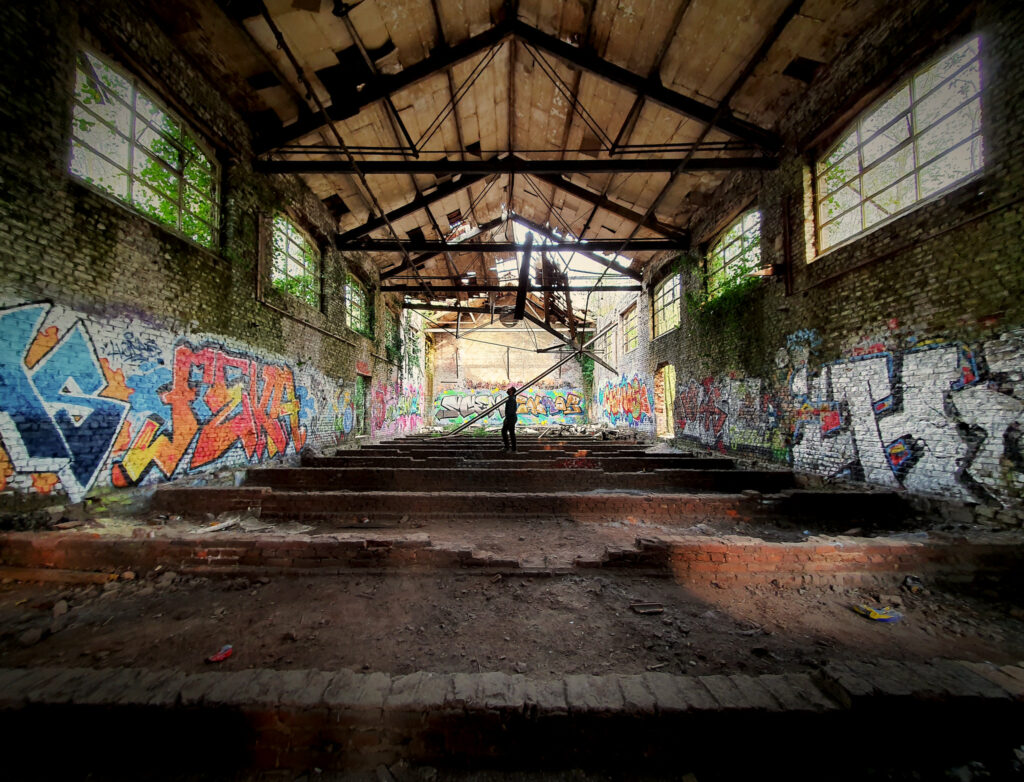
Once abandoned, the castle quickly became a legend among urbex enthusiasts. Its fairy-tale silhouette in ruins, majestic staircases, blue vaulted ceilings and devastated corridors made it one of the most photographed urban exploration spots in Belgium.
In 2013, the Tribune de Genève even ranked it among the 40 most beautiful forgotten places in the world.
Failed Attempts to Save the Castle
As the building’s condition worsened, enthusiasts created the ARESNO association in an effort to save the castle. In 2014, Minister Carlo Di Antonio temporarily placed the site on Wallonia’s heritage protection list, but this ultimately led to no restoration.
A demolition permit was granted in 2015. Despite several legal appeals and temporary work stoppages, the destruction finally began at the end of 2016.
A Slow, Controversial and Painful Dismantling
The demolition was marked by numerous incidents: suspicious fires, legal disputes, and fundraising campaigns hoping to dismantle the castle stone by stone. None of these efforts succeeded. In October 2017, the central tower was brought down, marking the definitive end of the château.
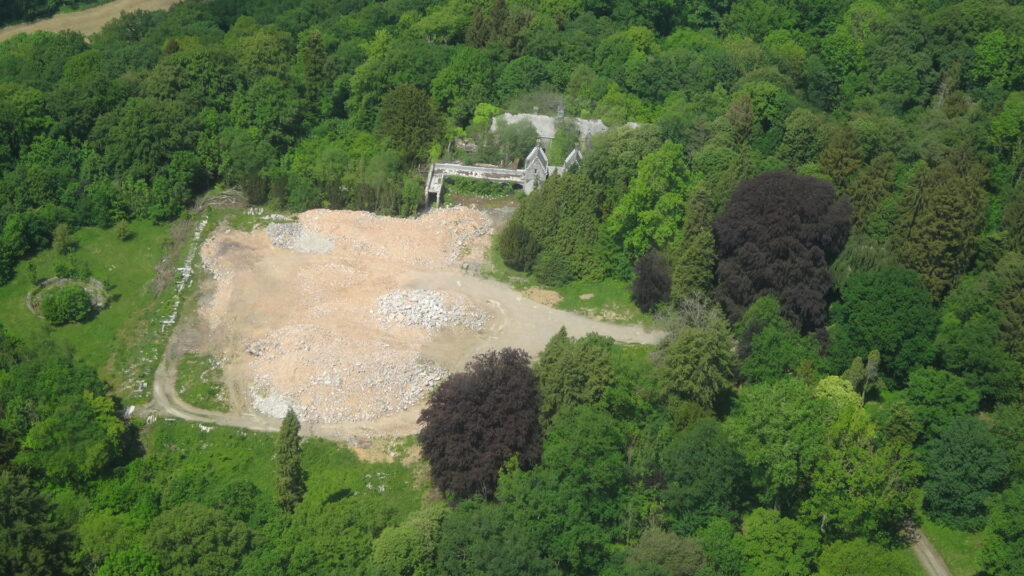
Today, only a few scattered ruins and the former stables remain — silent remnants of a heritage that once fascinated the world.
Château de Noisy in Popular Culture
The castle has been used as a filming location for several movies and television productions:
-
Anubis and the Revenge of Arghus (2009)
-
Dead Man Talking by Patrick Ridremont (2012)
-
Hannibal (Season 3, 2015), where it stands in for Castle Lecter in Lithuania
-
In 2025, a castle inspired by Noisy was recreated in Universal Studios’ Epic Universe park